
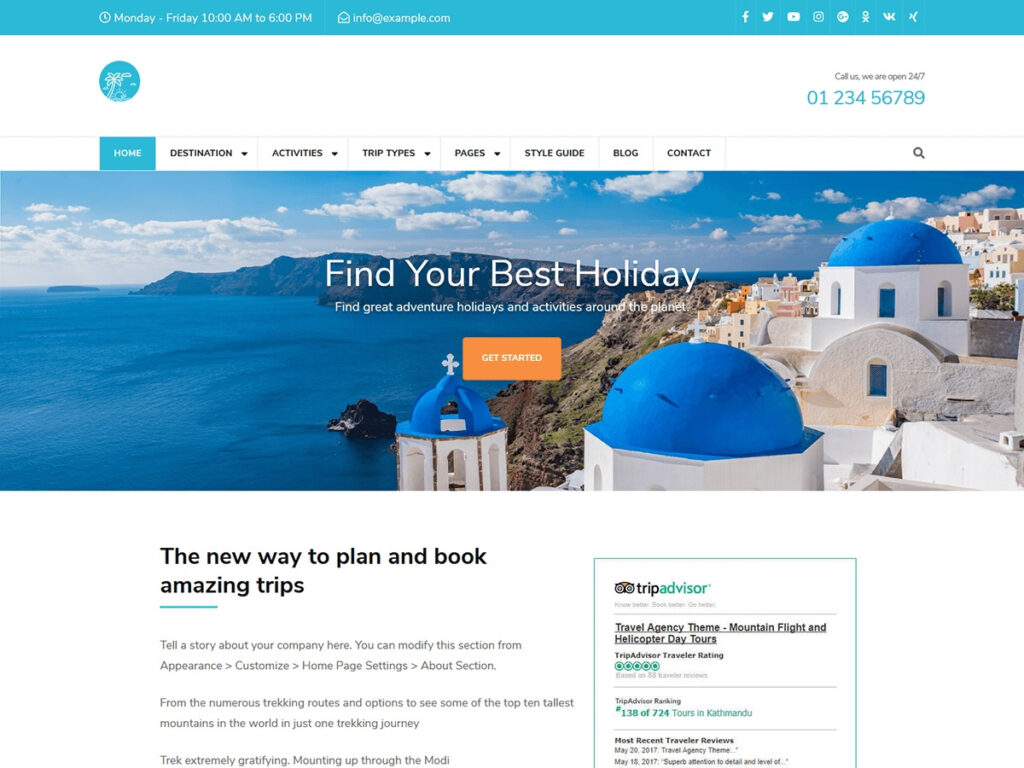
 Official Site
The global tourism economy is highly competitive, and your online presence acts directly as your primary storefront, booking agent, and brand ambassador. For premium tour operators, boutique destination management companies (DMCs), and private experience providers, executing a flawless digital strategy is no longer optional. However, an expensive structural misconception persists across the travel and hospitality industry: the belief that any beautiful WordPress website layout can easily function as an efficient conversion mechanism for commercial tour bookings.
Many tour business operators mistakenly hire a standard freelance developer to construct an experiential travel website using generic, multipurpose themes or heavy page builders. They assume that dropping a copy-pasted JavaScript checkout widget into a random text block constitutes a functional booking setup. In reality, forcing standard business presentation themes to handle live booking APIs, dynamic inventory pipelines, and fast mobile transactions results in code bloat, technical layout shift, broken checkouts, and missed sales.
To achieve maximum organic search engine rankings and high user conversion rates, a travel platform must be explicitly engineered from the codebase up. This comprehensive guide breaks down the true financial expenditures of developer-driven builds, the deep architectural friction of modifying generic WordPress structures for custom tour requirements, and the ultimate business solution: utilizing a dedicated, pre-integrated website engine built specifically to maximize your direct booking revenue.
1. The Cost of Your Developer: Real Budget and Resource Estimates
When calculating the financial investment required to launch a premium online storefront, business operators often look at baseline freelance rates without accounting for the extensive engineering hours necessary to make a third-party script play nicely with a complex content management system. Building a high-performance travel system requires a specialized technical framework.
To establish clear expectations, we must evaluate the development costs of an option built from nothing: a generic WordPress website architecture completely stripped of predefined designs, which a developer must manually bend, script, and optimize to support live tour inventory management and a seamless booking widget integration.
[Traditional Agency Project Scope]
  ├── Phase 1: Custom Wireframes & Design UI (20-30 Hours)
  ├── Phase 2: Template CSS/HTML Architecture (35-50 Hours)
  ├── Phase 3: Form Logic & Lead Routing (10-15 Hours)
  ├── Phase 4: Script Conflict Resolution & API Testing (15-20 Hours)
  └── Phase 5: Core Web Vitals & Tracking Setup (15-25 Hours)
The table below outlines the precise mechanical requirements, development phases, realistic hourly allocations, and total price estimates for executing a raw developer build tailored for premium tour sales.
| Development Phase & Technical Scope | Concrete Engineering Requirements | Estimated Hours | Total Price Range (At $80 – $150/Hour) |
| Design System & Global Typography Architecture | Engineering consistent global styling, specific responsive typography scales, localized brand asset hierarchies, padding frameworks, and intentional visual spacing models for high-end consumers. | 20 – 30 Hours | $1,600 – $4,500 |
| Custom Tour & Destination Template Engineering | Building clean, reusable PHP layout templates for individual tour listings, complex multi-day custom sample itineraries, regional destination directories, and interactive informational archives. | 35 – 50 Hours | $2.800 – $7,500 |
| Inquiry Funnel Validation & Field Conditional Logic | Developing advanced lead capture systems with specific multi-step data inputs (including explicit travel dates, guest count selectors, sliding budget ranges, interest arrays, and WhatsApp routing fields) without compromising database processing speed. | 10 – 15 Hours | $800 – $2,250 |
| TicketingHub Widget Integration & Script Synchronization | Manually embedding reservation scripts, resolving asynchronous JavaScript render-blocking loops, configuring custom button triggers, debugging layout overlapping properties (z-index), and maintaining continuous mobile viewport rendering stability. | 15 – 20 Hours | $1.200 – $30 |
| Core Web Vitals Optimization & Core Analytics Setup | Tuning server-side caching policies, eliminating unused asset scripts, deploying Google Tag Manager (GTM), constructing GA4 conversion event tracking for form submissions, and ensuring total GDPR tracking compliance. | 15 – 25 Hours | $1.200 – $3,750 |
| AGGREGATE TOTAL ESTIMATES | A completely custom, manually integrated tour website built from scratch. | 95 – 140 Hours | $7,600 – $210 |
The Freelance Budget Fallacy
Many small travel agencies look at these numbers and attempt to bypass them by hiring cheap marketplace freelancers who promise a full site build for a fixed rate of $800 to $1,500. This is where the hidden costs of web design emerge. A budget developer cannot afford to spend 100 hours writing clean code. Instead, they take a free multipurpose theme, install five to ten heavy plugins to mimic custom tour functionality, paste the booking embed code into a raw HTML widget, and deliver the site.
Within weeks, the structural cracks begin to show:
- The booking widget script crashes during seasonal updates because the theme modifies its global asset delivery pathways.
- Mobile loading speeds plummet past 5 seconds as multiple unoptimized scripts battle for server memory resources during rendering.
- Analytics tracking breaks, leaving the operator blind to where customers are dropping out of the checkout pipeline.
You end up paying a low initial price for a fragile layout that requires constant developer intervention just to stay online. True financial efficiency means investing in a rock-solid, production-ready codebase rather than funding an endless cycle of manual patches.
2. The Nightmare of Forcing a Multipurpose WordPress Theme to Conform
To understand why custom web design for tour operations breaks down inside standard WordPress architectures, you must understand how multipurpose themes work. Popular choices like Kadence, Divi, and Elementor are designed as general tools. They are built to satisfy an infinite number of use cases, meaning their underlying code must accommodate a real estate agency, an online boutique, or a corporate legal blog simultaneously.
To achieve this flexibility, multipurpose themes sacrifice speed, rendering efficiency, and structural simplicity. They rely on massive core asset libraries, extensive option maps saved within the database, and incredibly deep Document Object Model (DOM) nesting.
[Multipurpose Theme HTML Structure - Deep DOM]
<div class="site-wrapper">
  <div class="main-content-container">
    <div class="page-layout-inner">
      <div class="gutenberg-row-wrapper">
        <div class="kadence-column-inner-1">
          <div class="text-block-padding-box">
             <!-- TicketingHub Widget Forced Here -->
             <script src="ticketinghub.js"></script>
          </div>
        </div>
      </div>
    </div>
  </div>
</div>
When a visitor loads a page on a multipurpose theme, the server has to pull multiple stylesheets and scripts to check how the margins, columns, and colors are configured in the customizer. If your historical site footprint already relies on legacy builders like WPBakery, heavy modules like Slider Revolution, or a massive, unoptimized WooCommerce database, you are already dealing with massive server delays. Adding complex tour layouts to this structural mess creates severe technical roadblocks.
Script Conflicts and Layout Shifts
The critical breaking point occurs when you introduce real-time e-commerce integrations like the TicketingHub reservation engine into a general-purpose layout. The reservation software relies on external JavaScript execution to launch its interactive checkout calendars, track live ticket availability, and open modal payment forms instantly.
When a standard theme attempts to process this dynamic checkout layer, several technical conflicts routinely occur:
- Asynchronous Asset Blocking: Multipurpose themes often combine or delay JavaScript execution to trick basic speed testing tools. This optimization process can inadvertently delay your booking engine scripts, leaving consumers staring at a non-functional, unclickable button for several seconds.
- Cumulative Layout Shift (CLS): Because general frameworks do not pre-allocate explicit, pixel-perfect container spaces for unique tour pricing tables or live checkout buttons, the page layout visibly shifts as the script loads. Google penalizes websites with severe layout shifts, crushing your organic SEO visibility.
- Mobile Overlapping (
z-index) Failures: General-purpose headers and floating navigations are programmed with high priority layers. When the reservation modal opens on a smartphone, these theme headers often slice directly through the checkout screen, blocking the “Proceed to Payment” button and causing immediate cart abandonment.
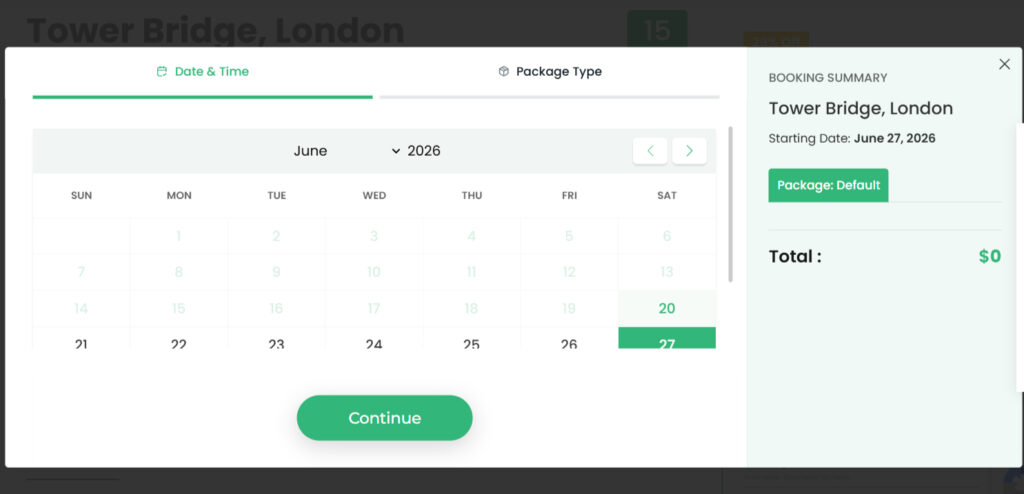
A website built merely to display general text cannot seamlessly support an active, real-time ticket inventory pipeline. Attempting to force compliance through endless lines of custom CSS patches creates an unstable, developer-dependent ecosystem that drains your cash flow and risks critical transaction failures.
3. The Best Solution: Buy a Pre-Integrated, Purpose-Built Tour Website Engine
The modern solution for scaling an active tour company avoids long, drawn-out agency development timelines and unstable general themes completely. The most effective approach is deploying a dedicated, premium tour website engine engineered specifically to combine high-end editorial aesthetics with native booking software compatibility.
Instead of building individual layout structures from scratch or installing heavy structural plugins, you acquire an optimized architecture where every template, query path, and asset script is already streamlined for performance. This strategy cuts your development time down from several months to just a day or two, while giving you complete ownership over your content.
[Our Tour Engine Architecture - Flat DOM]
<header class="tour-engine-header"></header>
<main class="optimized-tour-grid">
    <!-- TicketingHub Executes Natively in Pre-Allocated Layout Space -->
    <div id="native-ticketinghub-anchor"></div>
</main>
<footer class="tour-engine-footer"></footer>
Our specialized tour theme eliminates the layer of unnecessary code found in general-purpose frameworks. It replaces heavy, nested layout wrappers with a flat, semantic HTML layout designed to load in under a single second, ensuring your business sails through Google’s strict mobile performance and Core Web Vitals assessments.
Core Benefits and High-Performance Functions
- Native TicketingHub Execution Paths: The theme files feature dedicated, hard-coded injection points engineered specifically for your checkout code. The external calendar assets, pricing matrices, and reservation frames load instantly in perfect harmony with the theme’s styling, eliminating layout shifts, flash-of-unstyled-content errors, and mobile viewport blockages.
- Premium Editorial Layout Systems: The visual presentation borrows design cues from elite, luxury travel brands. It avoids generic block arrangements in favor of expansive white space, elegant typography hierarchies, and immersive, full-bleed imagery wrappers designed to capture the attention of high-net-worth travelers and premium corporate clients.
- Uncoupling from Core Database Strain: Instead of making constant database requests to load layout variables, all core interface layouts are rendered directly via lightning-fast file templates. This leaves your server resources completely free to process critical tasks, like handling live currency calculations and user data requests.
- Total Content Autonomy and Simple Replication: You receive clean, modular layouts for individual tour pages, regional landing directories, and multi-day custom itineraries. You can effortlessly duplicate an existing page, update the text and high-resolution images, and publish new products independently in minutes—entirely free from developer dependencies or ongoing maintenance fees.
- Conversion-Optimized Inquiry Funnels: For your high-end, tailor-made private tours that require detailed personal curation before booking, the system features a light, multi-field inquiry framework. This form captures all essential guest data—such as budget parameters, target travel windows, group sizes, and specific areas of interest—and routes the information directly to your inbox without slowing down your site.
Stop Wasting Capital on Broken Development Loops
Every day your business operates on a sluggish, unoptimized layout, you are actively losing direct bookings to competitors with cleaner user experiences. Stop spending thousands of dollars on generic developer builds that require endless troubleshooting, and stop fighting with multipurpose themes that fail to load properly on mobile devices.
Transition your tour operation onto a digital framework designed strictly for business expansion, ultra-fast performance, and flawless booking performance. Get the tour begins theme today at reimaginetravel.site