 Official Site
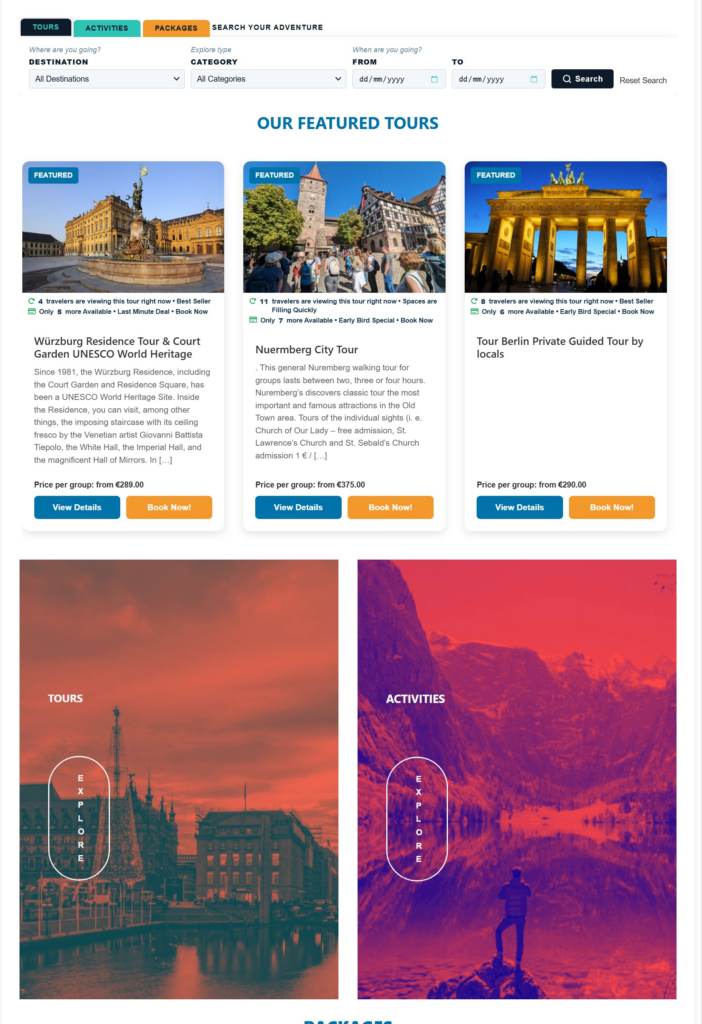
If you operate a tour or travel business on WordPress, you have likely run across the Traveler – Trip Booking WordPress Theme by Shine Themes on ThemeForest. Boasting thousands of sales and a polished, multi-functional live demo, it positions itself as the ultimate all-in-one ecosystem for the modern travel agency. On paper, paying a one-time Envato fee for a complete booking solution seems like a financial no-brainer.
But there is a catastrophic divide between a sterile theme demo environment and the harsh reality of running a live, revenue-dependent travel business.
When you install Traveler, you aren’t just buying a layout—you are anchoring your entire operational workflow, your search engine rankings, and your security infrastructure to a broken, bloated architectural model. Week after week, operators watch their rankings drop, their checkout flows fail, and their admin dashboards slow to a crawl.
This comprehensive, data-driven review breaks down the structural design flaws of the Traveler theme, exposes the severe backend and security risks of its monolithic approach, and outlines why separating your design from your booking logic using Tour Engine is the only way to scale your traffic and bookings without losing your mind.
1. The Monolithic Bloat: Why “All-in-One” is a Trap
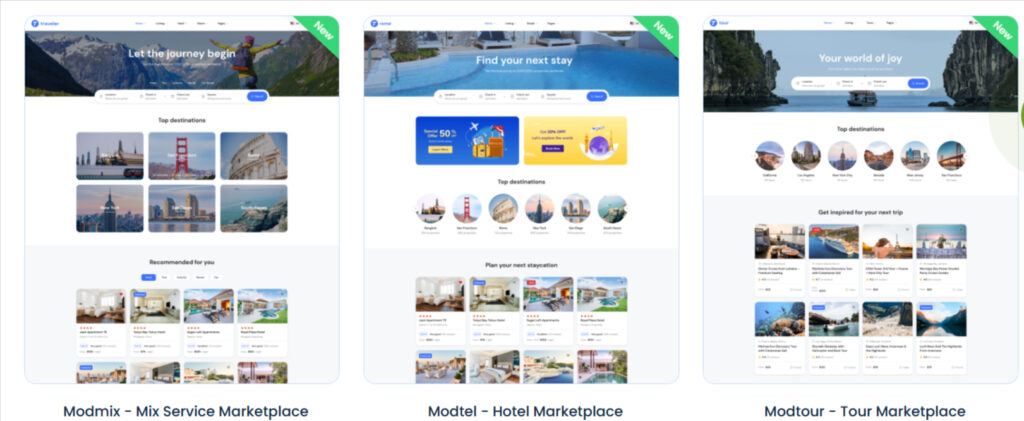
The core pitch of the Traveler theme is its extreme versatility. It is engineered to power hotels, car rentals, commercial flights, room rentals, activity bookings, and group tours simultaneously.
While a jacks-of-all-tradescodebase looks impressive on a ThemeForest feature list, it introduces immense technical debt to a focused tour operator.
[Traditional Monolithic Theme Structure]
├── Hotel Database Architecture (Unused)
├── Flight Script Processing (Unused)
├── Car Rental Query Logic (Unused)
├── Core Theme Styling & Fonts
└── Your Tour Booking Flow (Weighed down by structural bloat)
When a user lands on your website to book a simple single-day walking tour or a week-long luxury excursion, their browser is forced to download, parse, and execute heavy JavaScript files, CSS assets, and complex database schemas meant for multi-room hotel booking systems and vehicle availability logic.
This architectural philosophy breaks the foundational rule of high-performance web development: never make the client load code they do not use. This structural bloat results in severe latency across three primary metrics:
- High Time to First Byte (TTFB): Your server spends precious milliseconds parsing thousands of lines of unused theme files before it even begins sending data to the browser.
- Excessive Database Overhead: Simple availability lookups for tours are forced to query a massive, unoptimized database engine containing structural columns reserved for hotel check-ins, flight connections, and room amenities.
- Render-Blocking Scripts: The backend and frontend are chained together, slowing down the immediate visual delivery of your site content to your visitors.
2. Core Web Vitals & The Mobile SEO Penalty
In the modern travel market, over 60% of bookings occur on mobile devices, often while travelers are in-destination using transient 3G or 4G data connections. Concurrently, Google’s ranking algorithm relies heavily on Core Web Vitals—explicit speed and layout stability metrics that directly dictate where your site ranks on search engine results pages (SERPs).
Monolithic layouts like the Traveler theme struggle significantly under these strict performance standards:
| Core Web Vitals Metric | What It Measures | How Traveler Inherently Fails |
| LCP (Largest Contentful Paint) | How fast the main text or image content loads for a visitor. | Delayed by render-blocking scripts, heavy unoptimized theme icons, and massive framework packages. |
| INP (Interaction to Next Paint) | Mobile responsiveness when a user clicks a link, menu, or calendar day. | Heavy background JavaScript processes running concurrent tracking, multi-service calendars, and layout builders. |
| CLS (Cumulative Layout Shift) | Visual stability of the page layout as elements load. | Complex dynamic layout widgets cause elements to jump around on mobile viewports as custom theme scripts load late. |
If your website takes longer than 3 seconds to become fully interactive on a mobile network, you do not just lose the instant conversion; Google actively de-ranks your domain.
When your booking infrastructure is bound to your visual theme, you hit a dead end. Attempting to fix these speed issues with heavy optimization, minification, or caching plugins often introduces catastrophic technical conflicts. Because the theme’s integrated checkout scripts and calendar modules rely on constant, dynamic database reads, aggressive caching will frequently freeze calendars, break checkout validation fields, or display incorrect booking dates to prospective customers. You are forced to make an impossible choice: keep your site fast but broken, or keep it working but buried on page three of Google.
3. The Update Roulette: Operational Exhaustion
For a live travel business, continuity is everything. An hour of down-time during peak booking seasons translates directly to thousands of euros in lost revenue and permanently damaged client trust.
The Traveler theme relies on an architectural flaw known as the fusion of concerns. Instead of cleanly separating what your site looks like (your theme) from how your business operates (your booking software), Traveler locks both into a single theme directory.
[The Vulnerable Fusion Model]
Minor Visual Theme Fix (CSS/Font Update)
       └── Automatically alters ──> Core Booking Logic & Payment Processing
When Shine Themes releases an update to fix a minor layout bug, an Elementor style conflict, or a typography shift, that update is applied across the entire code ecosystem. When you click “Update” inside your WordPress dashboard, you are playing a high-stakes game of roulette:
- Broken Checkout Paths: A minor design tweak can instantly break your Stripe or PayPal payment gateway integration.
- Vanishing Calendars: Updated JavaScript files frequently conflict with your existing plugins, causing availability calendars to display as empty, blank white blocks on mobile devices.
- Wasted Operational Hours: Instead of managing your tours, communicating with guides, and growing your brand, you spend full afternoons crawling through Envato support tickets, running database rollbacks, and hunting down broken code.
4. The Security Nightmare: A Fragmented Architecture
A critical, often overlooked vulnerability of the ThemeForest monolithic model is its reliance on third-party plugin dependencies and massive, sprawling internal functional footprints. To deliver its massive array of features, themes like Traveler often require or bundle a suite of auxiliary plugins, visual builders, and custom shortcode handlers.
This creates a highly attractive target for malicious actors through an expanded attack surface.
[Expanded Attack Surface Exposure]
Your Server <── [Core Theme Vulnerabilities] ── [Outdated Bundled Plugins] ── [Insecure AJAX Endpoints]
A review of public vulnerability registries (such as WPScan and Patchstack) reveals a consistent, historical timeline of high and critical-severity security issues within the Traveler theme architecture, including:
- Unauthenticated SQL Injections (SQLi): Vulnerabilities within internal handlers (such as
order_idprocessing or custom search filters) that allow remote attackers to interact directly with your database, potentially pulling customer records, modifying booking data, or extracting site credentials. - Local File Inclusion (LFI): Vulnerabilities found within specialized theme functions (like custom AJAX post-loading routines) that allow completely unauthenticated attackers to execute arbitrary files on your server, completely bypassing WordPress access controls.
- Reflected Cross-Site Scripting (XSS) & PHP Object Injection: Arising from insufficient input sanitization and output escaping across the theme’s massive library of forms and shortcodes.
When your booking engine is trapped inside an enormous theme footprint, patching these vulnerabilities requires a full theme upgrade, bringing you right back to the Update Roulette. If a critical zero-day exploit drops, you are left completely vulnerable until a monolithic theme patch is rolled out, risking your customer data, site reputation, and payment gateway compliance.
5. Tour Creation Hell: Fighting Your Own Dashboard
Software should serve your business velocity, not slow it down. When you design a new excursion, corporate package, or wine vineyard tasting itinerary, getting it live on your site should take minutes.
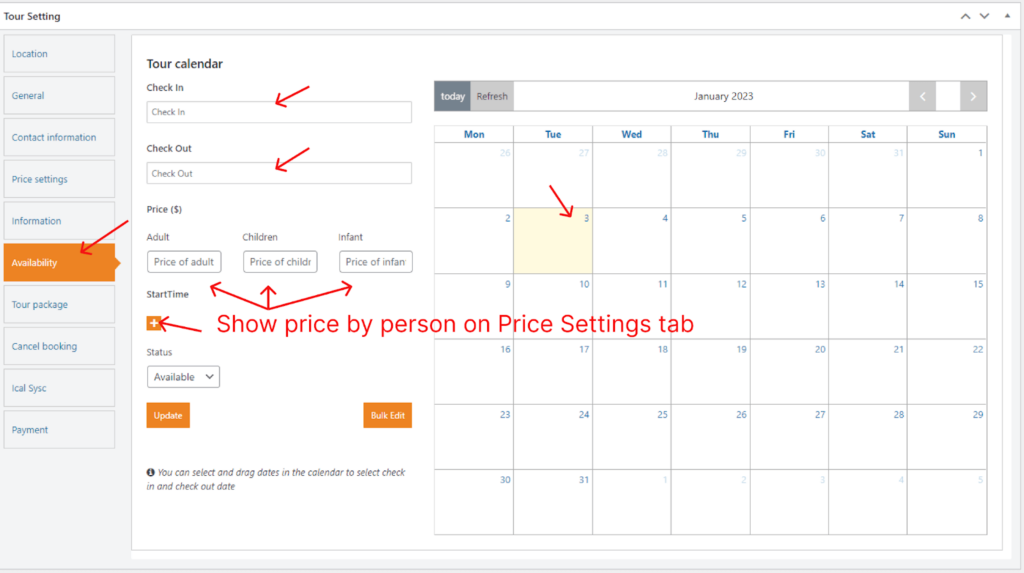
Fighting multiple bugs: Update a price, the page price does not update, you have to use several tools to try and get the price updated, or wait 5 minutes while you regenerate the availability and pricing.
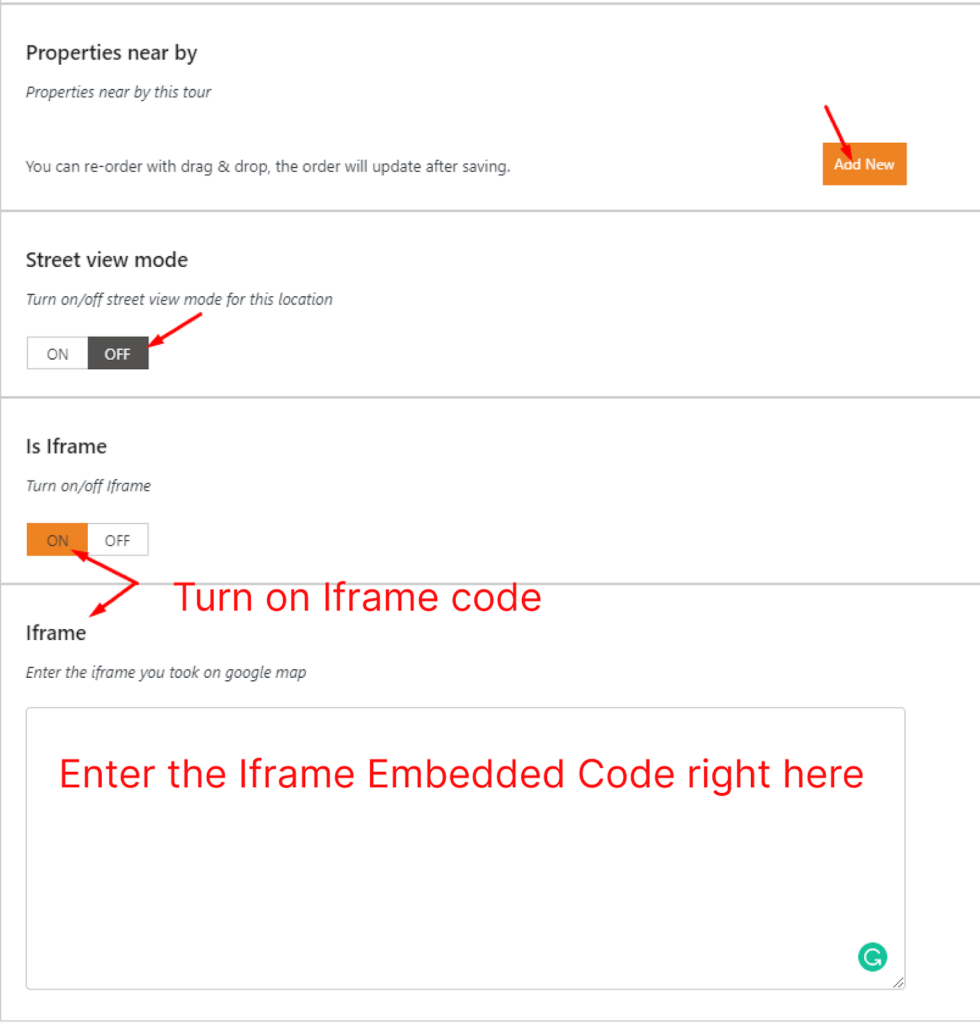
Fighting the Location: Evey Tour, Activity, Car Rental, Hotel has to have its own Location, and each location multiple defaults. After setting up and making a location look nice by images, filling in wasted times of options, your location is published, then you go through the nightmare of setting up the tour.
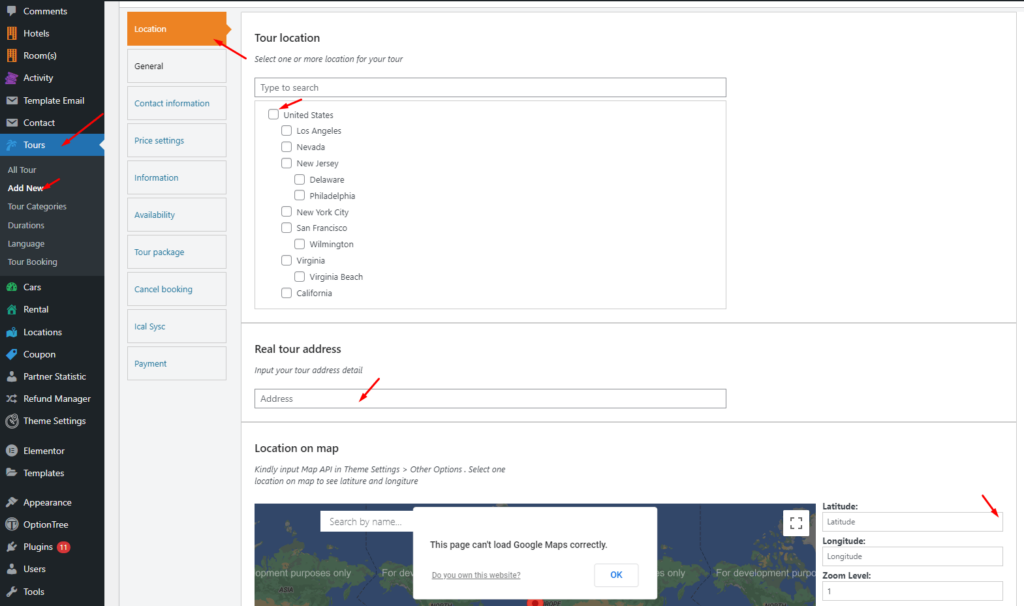
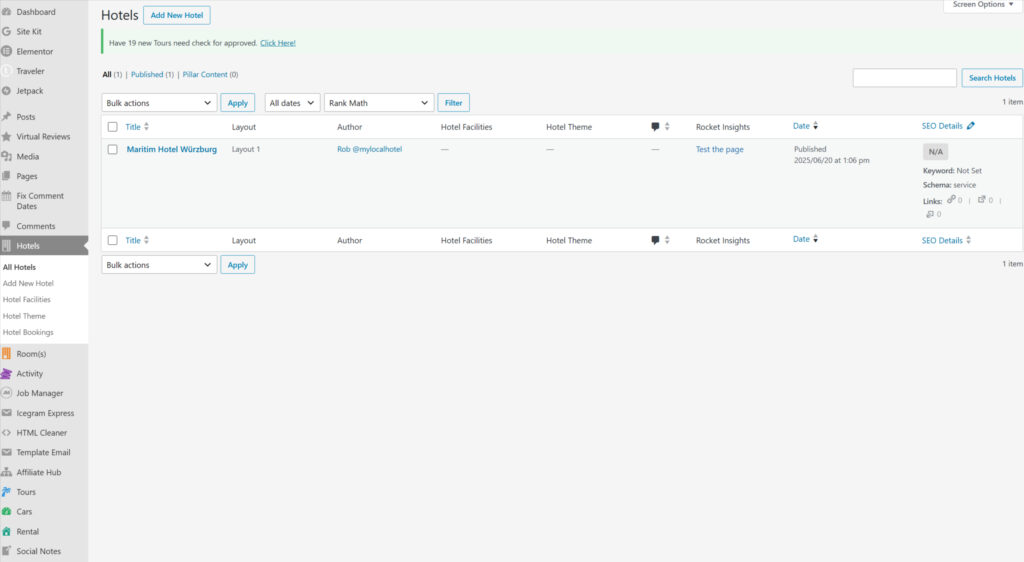
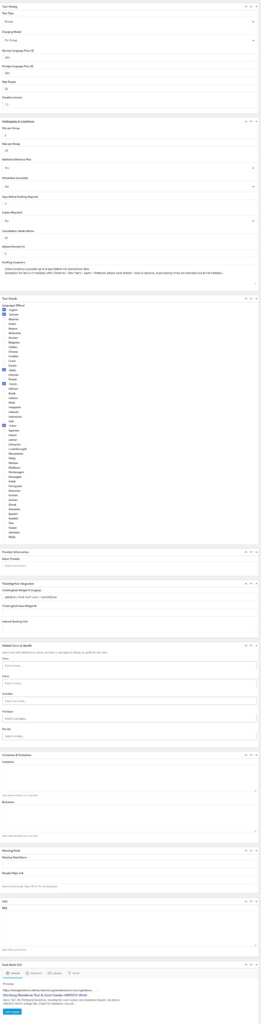
Because the Traveler backend dashboard is cluttered with parameters built for hotel room management, flight numbers, baggage allowances, and car rental parameters, creating a standard group tour becomes an exhausting, non-intuitive chore:
- Field Fatigue: You must wade through rows of irrelevant metadata options, hidden sub-panels, and rigid setting boxes just to configure a basic tour price and departure schedule.
- Rigid Scheduling Limits: Setting up complex structural patterns—like seasonal pricing shifts, early-bird tiers, or variable capacity constraints based on guide availability—requires fighting against a convoluted configuration panel.
- Delayed Time-to-Market: The mental friction and technical overhead of simply uploading an itinerary means updates are delayed, promotions are missed, and your business capacity remains bottlenecked.
The Modern Solution: Pure Separation of Concerns
The enterprise-grade travel industry abandoned monolithic all-in-one themes years ago. The modern, scalable approach to building a premium WordPress site relies on a clean separation of concerns.
[The Modern High-Performance Separation Model]
┌────────────────────────────────────────────────────────┐
│  YOUR DESIGN LAYER (Any Fast, Clean, Lightweight Theme)│
└───────────────────────────┬────────────────────────────┘
                            │ (Zero Functional Bloat)
┌───────────────────────────▼────────────────────────────┐
│  TOUR ENGINE (Dedicated, Database-Optimized Plugin)    │
└────────────────────────────────────────────────────────┘
Your theme should have exactly one job: rendering your design, typography, brand colors, and visual layouts. It should be incredibly lightweight.
Your booking infrastructure should be handled by a dedicated, hyper-focused application layer. This is precisely why we engineered Tour Engine.
Instead of trying to accommodate hotel properties, flights, and car rentals, Tour Engine focuses entirely on optimizing the group tour operator’s workflow, speed, and conversion funnel. It bypasses the entire broken market model of bloated themes, giving you a secure, isolated, and lightning-fast platform.
Tour Engine vs. Traveler by Shine Themes
| Operational Metric | Traveler Theme (Shine Themes) | Tour Engine Ecosystem |
| Software Architecture | Monolithic (Theme + Booking combined) | Modular Separation (Dedicated Plugin) |
| Code Footprint | Heavy (Contains unused hotel/flight systems) | Ultra-lightweight (100% tour-specific optimization) |
| Update Stability | High Risk (Layout updates can break checkout) | Isolated (Design and functionality don’t conflict) |
| Tour Creation Speed | Hours (Convoluted, field-heavy dashboard) | Minutes (Clean, intuitive tour operator interface) |
| Mobile Core Web Vitals | Poor (Prone to layout shifts & long load times) | Exceptional (Built for sub-second mobile renders) |
| Security Risk Profile | Broad attack surface with historical LFI/SQLi risks | Minimal footprint, strict sanitization, secure hooks |
From Creation to Google Search Results in Minutes
Tour Engine is engineered to slash the time it takes to move a tour concept from your head onto page one of search engines.
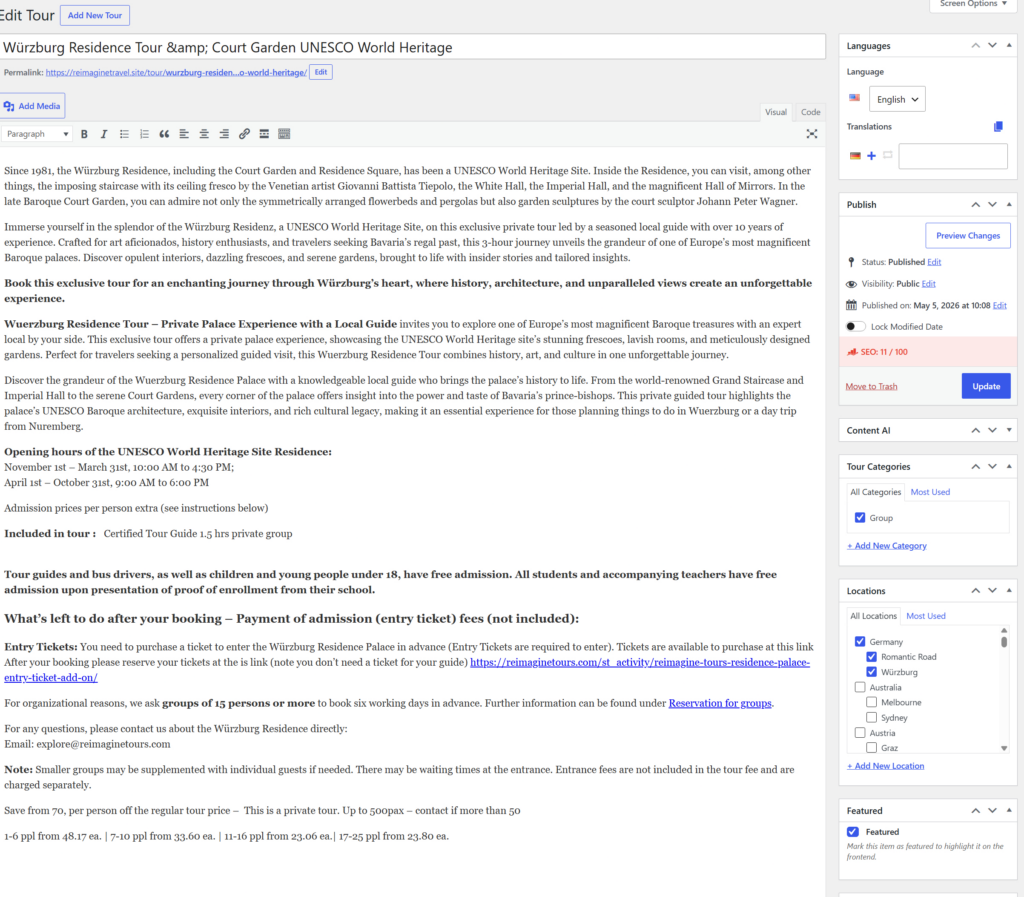
Step 1: The Clean Tour Builder
Our backend interface strips away the noise. You are presented with a logical, single-screen flow explicitly engineered for tour operators. Input your tour details, attach your media assets, set your pricing tiers (with fully integrated custom capacity rules), and hit publish. No hidden tabs, no hotel metadata fields, and no layout builder conflicts.
Step 2: Instant, Automated Schema Injection
The moment you hit publish, Tour Engine automatically injects structured, clean JSON-LD travel schema markup directly into the page source code.
JSON
{
  "@context": "https://schema.org",
  "@type": "Tour",
  "name": "Your Premium Vineyard Excursion",
  "description": "Full day guided wine tasting tour...",
  "provider": {
    "@type": "TravelAgency",
    "name": "Reimagine Travel"
  }
}
This structural data tells Google exactly what your tour is, where it takes place, what it costs, and when it departs. Instead of waiting weeks for search bots to figure out a messy theme layout, Google reads the dedicated schema instantly, accelerating your indexing and displaying rich snippet elements directly within search results.
Step 3: Streamlined Checkout Integration
When a buyer clicks “Book Now,” they are not met with a slow loading spinner or a clunky, multi-stage form. They go through a lightning-fast, high-converting, single-page checkout flow optimized for mobile swipe actions and quick touch entries.
Escaping the Monolithic Cycle: The One-Click Traveler Importer
The single biggest reason tour operators remain trapped within a slow, frustrating theme environment is migration dread. The prospect of manually copying over dozens of custom tour routes, image galleries, complex pricing configurations, and seasonal schedules feels like days of unbillable technical labor.
We believe you shouldn’t be held hostage by poor software design. To completely eliminate migration friction, we engineered a custom, dedicated Traveler Theme Importer.
[Frictionless Automated Migration]
Traveler Database Setup ──> [Tour Engine Importer] ──> Streamlined, High-Speed Architecture
- Complete Data Integrity: The importer safely connects to your existing database, extracts your Traveler theme tour records, and maps them directly onto Tour Engine’s streamlined, high-performance database structure. Your titles, descriptions, pricing variations, and media libraries transfer over perfectly.
- Risk-Free Staging Support: You can run the entire migration protocol on a private staging site. Your live website remains fully functional, continuously accepting bookings without a single second of down-time.
- Instant Optimization: The second the migration completes, you can deactivate the heavy functional framework of your old theme. Your site immediately sheds its database weight, and your mobile loading speeds instantly drop.
Stop Troubleshooting. Start Scaling.
Every hour you spend fixing a broken theme update, adjusting unoptimized mobile layouts, or fighting a cluttered dashboard is an hour stolen from your business development, your marketing, and your clients. Your website should be a high-performance engine that generates revenue, not a source of constant technical debt.
If you are considering purchasing the Traveler theme on ThemeForest, bypass the monolithic trap entirely. If you are already running it and watching your conversion rates and search traffic suffer, it’s time to break free.
Switch to a modern, secure architecture built explicitly to scale your operations.