

 Official Site
We Tested Gondola’s AI Website Builder — Here Is What We Found
We decided to test Gondola ourselves and used their AI mode to create a website. After going through the process, we found serious issues that make us question whether this platform is suitable for modern tour operators.
Our conclusion: Gondola feels like 10-year-old technology that has not kept up with the needs of today’s travel industry.
The First Problem: Reviews and Claims Generated by AI
The first thing we noticed on the website created by Gondola’s AI builder was review content and questionable claims.
The AI-generated website claimed recommendations and recognition from companies such as Forbes and Viator. These claims were not real endorsements.
This is a major problem. AI tools should not create fake credibility signals or make a business appear recommended by companies that have not actually provided endorsements. A professional website builder should help businesses create trustworthy websites, not generate misleading content that could damage their reputation.
The Website Looks Like It Came From Another Era
The website created by Gondola feels outdated. The design looks like it belongs to an earlier generation of websites rather than a modern travel business.
Today’s tourism websites need:
- Modern layouts
- Strong visuals
- Mobile-first design
- Clear booking paths
- Professional customer experiences
Instead, Gondola creates a website experience that feels old and disconnected from current expectations.
The use keyword stuffing and keyword spam in SEO.
Gondola advertises itself as a modern AI builder, but its checkout architecture is over a decade old[1][8]*. Because it lacks true booking integrations, clicking ‘Check Availability’ kicks your customer off your site and opens a new browser tab on mobile[5]. This 5-step off-site handoff causes high mobile drop-off and forces you to pay stacked fees to third-party booking engines instead of a simple 3% inline transaction*[7]
The Booking System Uses Outdated Technology
The booking experience is another major weakness. Instead of a modern booking widget or modal booking system, Gondola uses a page-by-page booking process.
Book now button at the top does nothing and this is on a live Boston tour site – they probably don’t even know it. Get started button on the hero also goes to # which is no where.
Customers are taken through separate pages rather than staying on the same tour page and completing the booking in a seamless experience. At Boston Tours we clicked book now, it did not make a popup but rather took us to the tour detail page and inquiry screen – this is not booking.
Modern booking systems are designed to reduce friction and increase conversions. A customer should be able to view a tour, select availability, and book without feeling like they have left the website.
No Booking Integrations — Despite AI Claims
One of the biggest problems we found ! We were asked to clarify for Gondola customers.
When Gondola claims to build tour websites, most operators assume it includes a booking system. In reality, Gondola has no native booking integrations[2]. Instead of embedding an inline checkout widget on your domain, Gondola simply links your ‘Book Now’ button to an external site like Peek or Ticket Fairy[4][5]. Your site isn’t actually taking bookings—it’s just redirecting customers away[11][13].”
The difference between a hyperlink redirect and a true, native booking integration.
Gondola markets itself as an AI-powered website builder, but technically it functions as a presentation layer[1][2]. Instead of processing bookings directly on the operator’s site through native API integrations or inline widgets, Gondola relies on static buttons that link off-site to third-party portals like Peek or TripWorks[3]
This is especially concerning because the AI-generated website suggested features and capabilities that are not actually available.
A modern tour operator needs a website that connects with booking platforms and reservation systems. Without integrations, businesses cannot easily manage their sales channels or connect their existing booking infrastructure. This is a critical limitation for professional operators.
“No Booking Integration”
- Hyperlink Linkouts vs. Native API Integration
- What Gondola does: It places external links on a “Check Availability” button[3].
- What a true integration is: A native booking engine embeds an inline overlay/widget directly on the operator’s domain, letting customers complete the checkout without leaving the site[7].
- The 5-Step Off-Site Journey vs. 2-Click Pop-Up
- Because there is no real booking engine integration, customers who click “Book Now” undergo a 5-step, multi-page redirection funnel[8].
- On mobile devices, this forces open an entirely new browser tab (e.g.,
book.peek.com), severing SSL security indicators and destroying brand authority[13][14].
- Fee Stacking Penalty
- Without direct gateway or booking engine integrations, operators must pay Gondola for website hosting and pay high third-party platform fees (ranging up to 8-9% on lower volume tiers) to outside booking systems[13].
How long would it take for Gondola to fix all the issues ? 6 Months?
When we mention a six-month timeframe, we are referring to the estimated timeline required for Gondola to rebuild its underlying software architecture and roll out platform-wide fixes across its entire customer base—not the turnaround time for an individual support ticket.
Instead of waiting half a year for vendor fixes, operators can transition to a fully integrated, 3% inline booking system in just a few days.
We Contacted Gondola
We finally spoke with the team. A good team and they are focused on the same thing we are but their new report has some flaws.
and they are using a new version of keyword stuffing and keyword spam in SEO
What Gondola is doing AI-generated GEO content spam or poorly implemented Generative Engine Optimization (GEO).
GEO itself is legitimate: optimizing content so AI-powered search engines can understand and reference it. The problem is the execution.
Your supplied Morgan Hill Wine Trolley website content shows several specific problems.
What is wrong with it Gondola’s GEO?
1. AI-generated content published without editing
The literal heading “Sales Pitch” appears repeatedly in product descriptions. That looks like an internal content-generation label that should have been removed before publication.
2. Keyword repetition and content duplication
The same wine-tour sales copy, location references, and descriptions of the experience recur across multiple products and pages. The About Us and homepage also repeat substantial sections of the same material.
3. Poor content formatting and presentation
Content is presented as largely unstructured text. Sections such as itineraries, highlights, inclusions, and exclusions need a consistent visual hierarchy, proper headings, lists, spacing, and readable layouts. The content extraction also shows bold text and inconsistent formatting.
4. Content written for search engines rather than people
Repeated location phrases and generic promotional language make the pages feel formulaic instead of providing distinctive, useful information about each tour.
5. GEO implemented as content production rather than a content strategy
Adding more AI-generated paragraphs and location keywords does not automatically improve visibility in AI search. Content should be accurate, useful, distinctive, properly structured, and written for actual customers. Making 20 copies of the same FAQs is like keyword stuffing and keyword spam in GEO
Case example Gondola customer: https://crawlnashville.com/llm-start-here
The worse thing for Gondola’s customers is that most people are booking on mobile and click the availability or a book button it opens to a complete different site, you lose brand authority and trust and the booking. See full report for Crawl Nashville Below*
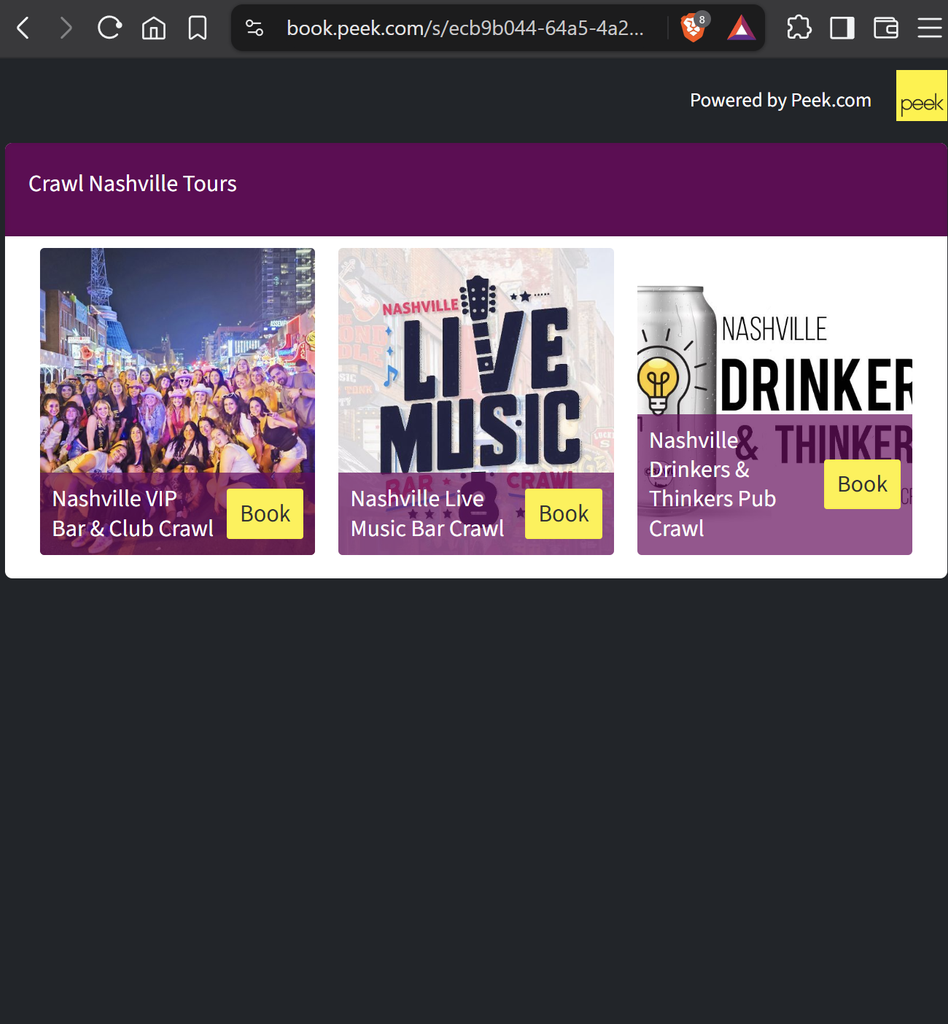
Screenshots:

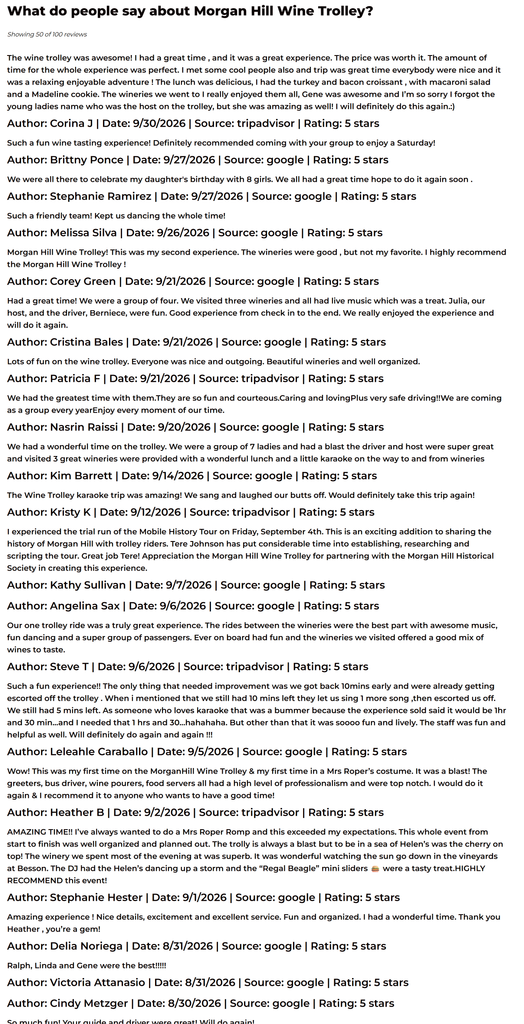
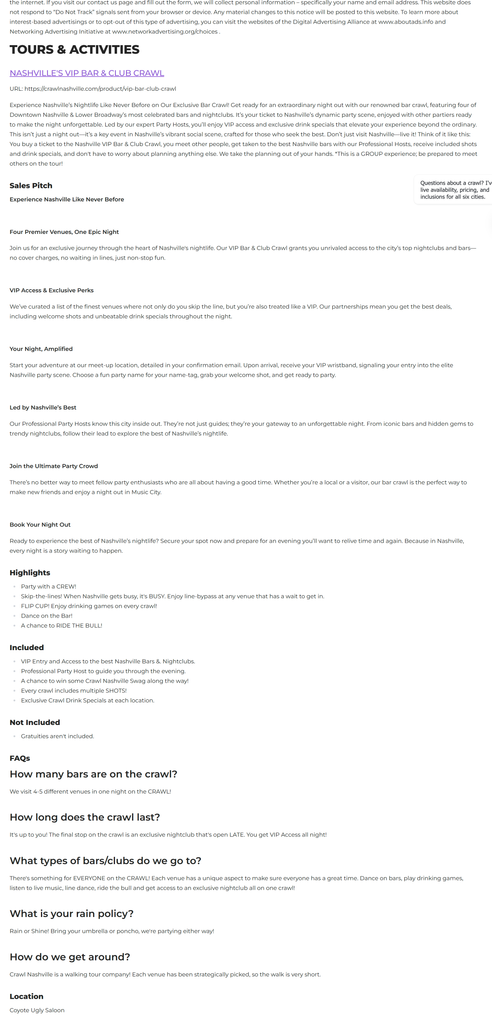
What do you call the overall problem?
The most accurate professional description is:
“Poorly executed GEO and AI-content publishing, resulting in keyword-heavy, repetitive, unedited content and a poor user experience.”
*Gondolas New Report and AI perspective:
Reasonably solid (descriptive, with caveats the report states itself)
- Google search visits per site fell on Gondola’s own sites. The cohorts give different sizes of drop: 41% (52 sites), 35% (20 sites), 25% (131 sites, Jan-Apr). The headline uses the biggest.
- Branded clicks up and discovery clicks down. The classification covers only top queries.
- Higher Google rank goes with more AI citations (26% vs 5%). It’s correlation.
- Google’s AI products mostly cite Maps Place Cards.
Overstated or misleading
- “121% increase” is not an effect size. It’s raw: 53% vs 24%. After adjusting for site strength the lift is 7 points, so roughly 75% of the gap isn’t the page. The groups weren’t randomized (14 builders vs 20 comparison sites). The headline uses causal language (“increased”) that the report’s own limits contradict.
- “96%” is reframed. The chart shows what share of google.com citations are Maps Place Cards. The text says that when Google’s AI mentions an operator, it shows the Business Profile 96% of the time. Those are different claims.
- “83% of cited pages weren’t in Google’s top 20” depends on a proxy query they chose. The report admits AI uses narrower searches that the benchmark doesn’t observe. The real figure is likely lower.
- The prompts were written about the 34 businesses. That inflates “visibility” (for example, 61% for the Morgan Hill example) and makes operator-site citations expected. It isn’t a measure of discovery.
- “90% hold the top 3” has the same flaw. It’s a sales claim, and the report labels it a “shameless plug.”
- “None of them move the needle” (backlinks, reviews, schema, blogs, length) is absence of evidence at n≈30. The report admits nulls may reflect sample size. 80% of the cohort shipped the same schema bundle, so there was little variation to detect an effect.
- Mentions: 43% vs 30% (n=30) becomes “inconclusive” once site strength is controlled for. The key-highlights section drops that caveat.
- “Most OTAs lost over half their traffic” rests on modeled Ahrefs estimates, and only 2 of the 4 named lost more than half.
- “Invisible AI research can be much larger” is unmeasured. Measured AI referrals are about 8 visits a month per site.
Unsupported or untested
- “AI Start Here is used by many leading websites.” No evidence is given.
- 13 of 14 pages cited shows AI used them, not that they caused recommendations or bookings.
- The two-operator case (n=2) proves nothing; the CEO says so himself.
- Peec’s tracked responses may differ from what real users see (location, personalization, non-deterministic answers). This isn’t discussed.
- Traffic decline is not attributed to AI by the report. Google’s
num=100removal and other changes confound it. - Survivorship: the cohorts exclude retired sites.
- I haven’t verified the Ahrefs 75,000-brand study it cites.
Conflict of interest: Gondola funded and ran it, every operator is a customer, and it sells the product being tested. The report is unusually candid about this, but the headline claims are stronger than the body.
Net: the hub idea is plausible, but the evidence for it is weak (7 points, non-randomized).
Final Verdict
After testing Gondola ourselves, we do not recommend it for serious tour operators. The booking platform is one of the most expensive available. However we can help if you have Gondola integrate our booking system platform, or sell you our platform theme and convert all your data and tours.
The platform website design feels outdated, the booking experience uses an old-fashioned process, and there are no booking integrations despite what the AI-generated website suggests.
The travel industry has moved forward. Tour operators need modern technology built around conversions, integrations, and customer experience.
Gondola feels like 10-year-old tech that is not worth investing in but they are moving into a new version that sounds promising.
Our approach
Our AI LLM Info Hub is designed as a structured knowledge source for AI platforms and AI search, not simply a collection of keyword-heavy marketing pages.
Our content demonstrates several deliberate features:
- Clear structure: About Us, Our Story, Who We Are, What We Do, FAQs, geographic regions, tours, and individual tour details.
- Context and relationships: It connects Reimagine Tours with its services, destinations, experience, awards, partners, and specific tour offerings.
- Readable formatting: Headings, questions and answers, descriptive paragraphs, and organized tour information.
- Controllable content volume: You decide how many reviews, posts, and tour entries are included.
- Discoverability: The page provides AI systems with a consolidated source of information about your business.
That’s fundamentally different in intent from publishing repetitive, generic text simply to fill pages.
One important distinction: good formatting and useful context make a page more useful to AI systems, they help that every AI platform will crawl, index, and cite it. Technical accessibility, accurate information, consistency, and crawl permissions also matter.
AI describes our approach as a structured, context-rich LLM knowledge hub designed for AI discoverability. GEO (Generative Engine Optimization) is a reasonable term for the broader strategy.
Case example : https://reimaginetours.site/ai-llm-info-hub/
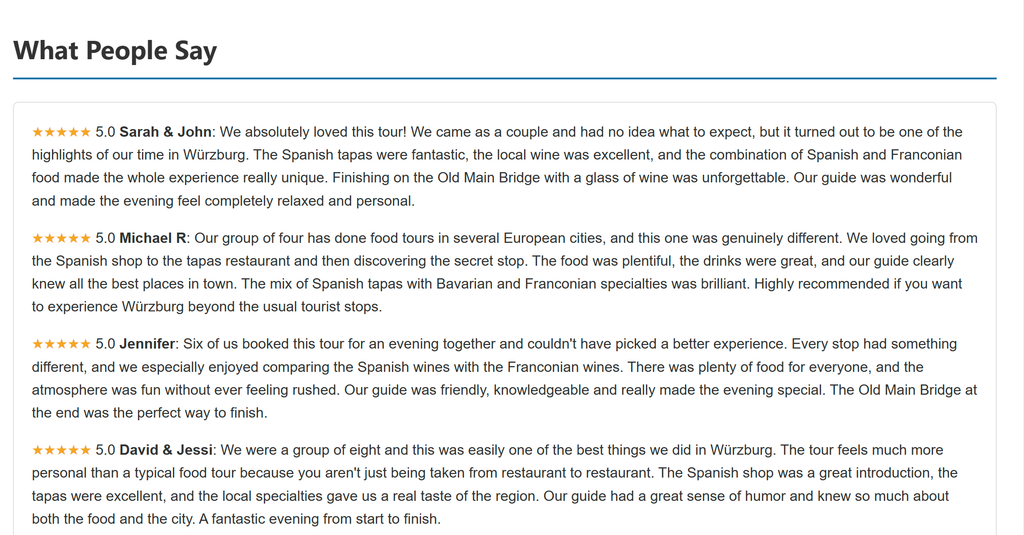
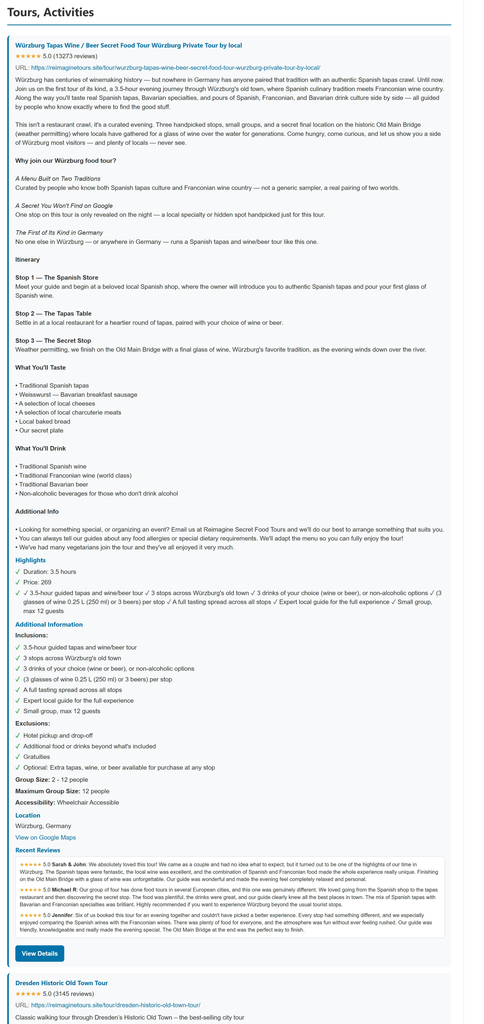
Crawl Nashville Summary report:
An analysis of Crawl Nashville (crawlnashville.com) demonstrates how it serves as a textbook example of the friction, brand erosion, and conversion bottlenecks detailed in your review and customer pitch.
1. The UX & Brand Trust Breakdown (Off-Site Redirects)
- Immediate Loss of Domain Authority: Crawl Nashville is explicitly built using the Gondola builder[1]. When a user clicks “CHECK AVAILABILITY”, instead of triggering a seamless inline modal on
crawlnashville.com, the system redirects them to an external third-party domain—either Peek (book.peek.com/s/...)[2] or Ticket Fairy (ticketfairy.com/event/...)[5][6]. - Mobile Friction & Security Hesitation: On mobile devices, opening an external domain (
book.peek.com) launches a whole new tab or window[7][8]. Customers who were ready to purchase from Crawl Nashville are suddenly looking at a completely different URL and interface. This abrupt handoff breaks brand trust and prompts safety concerns (“Did I leave the official site? Is my payment secure?”), driving up bounce and abandonment rates[7][8].
2. Time-to-Book & Click-Path Analysis
A modern, high-converting booking engine keeps users on-page with a 1-to-2-click inline checkout widget[9][10]. Under Gondola’s setup on Crawl Nashville, the process is far slower and fragmented:
A booking on a Gondola site requires 5 distinct steps and multi-click navigation across external domains, rather than a single seamless inline booking widget that keeps them interested into completing the booking (Wait for Peek’s external scripts, assets, and calendar widgets to load separately from scratch – Re-orient on Peek’s interface, select dates/times, and navigate a multi-step checkout form off-domain.)
Impact on Conversion: This multi-click, multi-domain path adds unnecessary seconds—or even minutes—to the transaction while multiplying friction points where a user can back out[7][10].
3. High Booking Fees & Fragmented Tech Stack
- Fee Stacking: Because Gondola lacks seamless native booking integrations, operators like Crawl Nashville are forced to stack third-party booking platforms (like Peek Pro or Ticket Fairy) on top of their website builder[2].
- Margin Impact: This results in high transaction fees passed on to customers or absorbed by the operator, far exceeding your proposed 3% flat transaction fee model with direct inline widgets[7][9].
4. Outdated Architecture & GEO Spam Example
- Outdated Page Design: The layout lacks a modern, mobile-first booking popup, relying instead on static buttons linked externally[2]. As well as featured tour cards and widget on the home page resulting in the user to make more clicks to find a suitable tour.
- AI Content Strategy: Crawl Nashville is even cited in your review as an active example of Gondola’s unedited AI content pages (
crawlnashville.com/llm-start-here)[8], illustrating the difference between generic keyword-stuffed AI pages and a structured AI LLM Info Hub[8].
Summary of Morgan Hill Wine Trolley (mhwinetrolley.com)
Morgan Hill Wine Trolley offers guided motorized cable car and trolley wine-tasting tours, karaoke nights, and private events across the Santa Clara County wine region (Morgan Hill, San Martin, and Gilroy)[1].
- Platform & Design: The site was built using Gondola’s website builder[5]. Like other Gondola sites, the footer includes a dedicated link to
mhwinetrolley.com/llm-start-here[6]. - Booking UX & Redirects: When a user clicks “Reserve Your Seat” or “Request a Quote,” the site redirects them off-domain to an external booking system (
morgan-hill-wine-trolley.tripworks.com)[3]. This introduces the same multi-click friction, external tab launches, and loss of brand authority seen across Gondola’s client base[9][10]. - The /llm-start-here Page: This page represents Gondola’s attempt at Generative Engine Optimization (GEO)[10][11]. However, instead of building a structured knowledge graph for AI models, it serves as a dumping ground for raw, unedited AI content[10][11].
Analysis of Gondola’s Flawed GEO Implementation
Our breakdown accurately diagnoses why Gondola’s approach to AI search optimization fails[11]. legitimate Generative Engine Optimization (GEO) focuses on structuring structured facts, relationships, and clear context so AI engines (ChatGPT, Gemini, Perplexity, Google AI Overviews) can easily extract and cite information[12].
Gondola, by contrast, has turned GEO into a modern form of keyword stuffing and content spam[10][11].
1. Unedited AI Content Output
- The Flaw: Internal prompt labels and generation instructions (such as literal “Sales Pitch” headings) are left directly in live product descriptions[15].
- The Impact: Leaving raw prompt markers on public tour pages signals a total lack of editorial review, severely damaging business credibility and brand trust[15][16].
2. Excessive Keyword Repetition & Content Duplication
- The Flaw: Identical wine-tour sales copy, location keywords, and experience summaries are copied verbatim across product listings, the About Us page, and the homepage[15].
- The Impact: Duplicate content dilutes domain authority[10]. Search engines punish bulk-replicated text rather than rewarding it.
3. Unstructured Formatting & Low Visual Quality
- The Flaw: Content is presented in long, unformatted blocks of text with inconsistent bolding, missing visual hierarchies, and messy spacing[17].
- The Impact: Both human readers and AI crawlers struggle to digest unstructured walls of text[13][17]. Proper GEO requires clean semantic headings, bulleted lists, clear itineraries, and distinct QA sections[13][17].
4. Bot-Centric Writing vs. Customer Value
- The Flaw: Text is stuffed with repetitive geographic phrases (e.g., repeating “south Santa Clara County wine country” dozens of times) rather than offering unique, helpful information about individual wineries or tours[17].
- The Impact: Pages feel robotic and formulaic to potential customers, increasing bounce rates and reducing conversions[17][18].
5. GEO as Bulk Production vs. Strategic Knowledge Architecture
- The Flaw: Gondola treats AI optimization as simply generating dozens of near-identical FAQ pages and long AI blog dumps[10].
- The Impact: Multiplying 20 variations of the same FAQ is the modern equivalent of 2000s-era keyword stuffing[10]. AI platforms prioritize authoritative, concise, non-redundant data sources rather than repetitive marketing copy[13][14].
The Alternative: Gondola’s Spam vs. A True AI LLM Info Hub
| Feature / Criteria | Gondola’s GEO Implementation | Reimagine Travel AI LLM Info Hub |
|---|---|---|
| Strategy | Bulk AI content generation & keyword duplication[10][11] | Structured business knowledge graph[13][19] |
| Content Quality | Unedited prompt labels (“Sales Pitch”), unformatted text[15][17] | Clean hierarchy, curated FAQs, precise tour data[13] |
| User Experience | Formulaic, repetitive marketing text[17] | High-value, readable information for humans & AI[13] |
| Search Engine Perception | Risk of keyword spam flags & organic traffic drops[10][20] | Optimized for direct citations in Gemini, ChatGPT & Perplexity |