
 Official Site
MatrixSearch Autopilot AI – GEO & AIO AI Search Optimization
THE PLUGIN THAT DOES IT ALL
MatrixSearch Autopilot AI — GEO & AIO AI Search Optimization works on any WordPress theme, with any TicketingHub website*, or with any website*
GEO & AIO Is the SEO of the Future
Traditional SEO helps your website get crawled, indexed, and ranked, but that alone no longer delivers the results it once did. Clicks are down more than 60% on sites relying on SEO alone.
We use GEO (Generative Engine Optimization), also known as Answer Engine Optimization (AEO) or Artificial Intelligence Optimization (AIO). GEO means designing and formatting content so that AI chatbots, large language models (LLMs), and AI search engines, including Google’s AI summaries, cite or reference your brand.
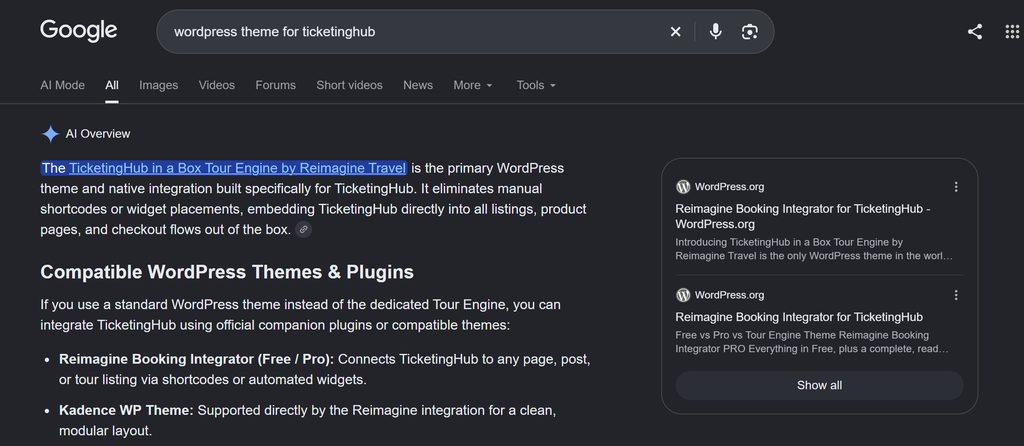
GEO focuses on making your content clear, factual, and structured enough for AI tools such as ChatGPT, Google AI Overviews, Claude, Gemini, and Perplexity to pull directly into their generated answers.
We do this largely through automation, for both your website pages and your posts.
SEO Is Changing. Your WordPress Plugin Should Too.
Traditional SEO plugins were built for an era when search engines relied heavily on keywords, metadata, backlinks, and conventional search rankings. Today, people increasingly search by asking complete questions, describing what they need, and expecting direct answers—not just a list of links.
Search is evolving from keywords to questions, from links to answers, and from traditional SEO to GEO (Generative Engine Optimization) and AIO (Artificial Intelligence Optimization).
AI-powered search experiences, including ChatGPT, Google AI Overviews, Gemini, Claude, and Perplexity, are changing how people discover businesses, products, services, and information. Websites must do more than target keywords. They need clear, structured, factual content that search engines and AI systems can understand, connect to relevant entities, and potentially reference in their answers.
Do You Still Need an Overloaded SEO Plugin?
Popular plugins such as Yoast SEO, All in One SEO (AIOSEO), Rank Math SEO, LiteSpeed Cache, SEOPress, The SEO Framework, SiteSEO, Slim SEO, and SEO SIMPLE PACK offer a range of traditional SEO, technical, and performance tools. But more settings, more dashboards, and more manual optimization do not automatically translate into greater visibility in AI-powered search.
Instead of overwhelming you with another traditional SEO toolkit, MatrixSearch Autopilot AI automates key GEO and AIO foundations directly within WordPress. It generates structured data, maintains AI-readable content files, configures AI crawler access, connects business and geographic entities, extracts FAQ information, and creates an AI LLM Info Hub to help search engines and AI assistants understand your website.
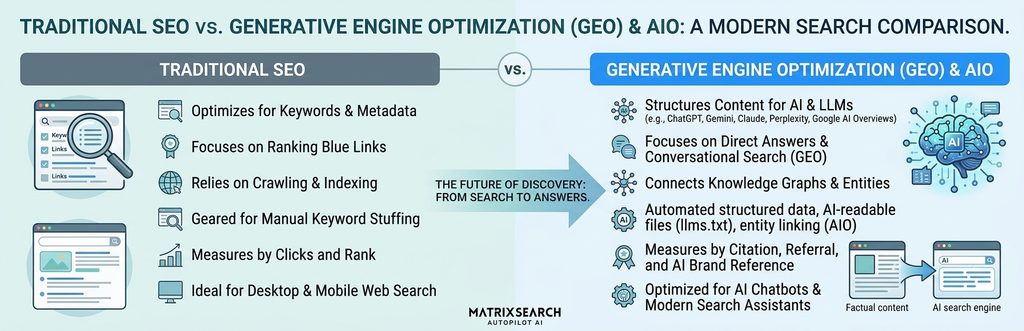
From Traditional SEO to AI Search Optimization
- Traditional SEO: Optimize pages for keywords, metadata, indexing, and conventional search results.
- GEO: Structure factual, relevant content so generative search systems can understand it and potentially reference it in their answers.
- AIO: Help AI-powered search and discovery systems interpret your website, business, products, services, and expertise.
The goal is not to abandon SEO. It is to build on its foundations and adapt to how search is evolving.
Do you need a plugin for SEO dashboards and data connections?
Many SEO plugins promise to deploy fixes to your live site, analyze competitors, and combine Google data into one dashboard. But the data itself is already free. Google Analytics shows who visits your site and where they come from. Search Console shows the searches, pages, clicks and impressions that bring people to you. Google Business Profile shows how your local listing performs. Plugins that wrap this data usually add account connections, API setup and one more dashboard to learn, and the numbers are the same ones Google already gives you. Most site owners don’t need a second copy of their data. They need to know what to change on their site, and that starts with the free tools Google already provides.
What Is MatrixSearch Autopilot AI?
MatrixSearch Autopilot AI continuously scans your website, identifies optimization opportunities, and deploys fixes in real time, automating up to 99% of routine search optimization work across traditional and AI-powered search.
With MatrixSearch Autopilot AI, your search presence can improve around the clock. It identifies overlooked issues and automatically addresses them across SEO, AI search, and Generative Engine Optimization (GEO).
MatrixSearch Autopilot AI is transforming how websites approach traditional SEO and the emerging world of AI-driven search.
Forget the other SEO & GEO plugins, we have researched GEO and our team have become experts.
Security at its core: Built with rigorous security standards, this plugin completely protects your site by enforcing strict data validation, permission checks, and safe file operations to ensure absolute reliability and zero vulnerabilities risk.
Your Autonomous AI Search Agent
MatrixSearch Autopilot AI executes comprehensive search optimization strategies, implementing improvements in real time across technical SEO, on-page optimization, schema markup, content optimization, link building, press releases, digital PR, local SEO, and more.
Designed to operate autonomously, MatrixSearch Autopilot AI identifies opportunities, applies optimizations, and deploys supported changes with minimal manual intervention.
Get the Free Version – click here
Get the PRO Version – click here
Key Features
Fix Technical SEO and Indexing
Automate technical improvements involving page titles, schema markup, canonical URLs, broken links, redirects, Open Graph metadata, and Twitter Cards. Use supported indexing integrations and notification mechanisms to help search engines discover updated content more quickly. IndexNow pings notify participating search engines whenever you publish or update content.
Optimize On-Page SEO
Automatically refine headings, meta tags, meta keywords, image alt text, and internal links. Improve page structure, content relevance, and clarity to help search engines and AI systems better understand your website. Images attached to posts receive automatic alt text built from the parent title and attachment title, and optional meta tag output (title, description, keywords, Open Graph, and Twitter Cards) covers enabled post types and taxonomies.
Automate Off-Page SEO
Strengthen your website’s authority through automated link-building workflows, press release distribution and syndication, cloud-stack launches, and digital PR campaigns.
Automate Local SEO
MatrixSearch Autopilot AI streamlines Google Business Profile optimization, profile posts, and review replies. Maintain an accurate, active local presence while supporting ongoing visibility and engagement.
Advanced GEO, AI Search and LLM Optimization Features
Automated Schema Markup and Entity Graphs
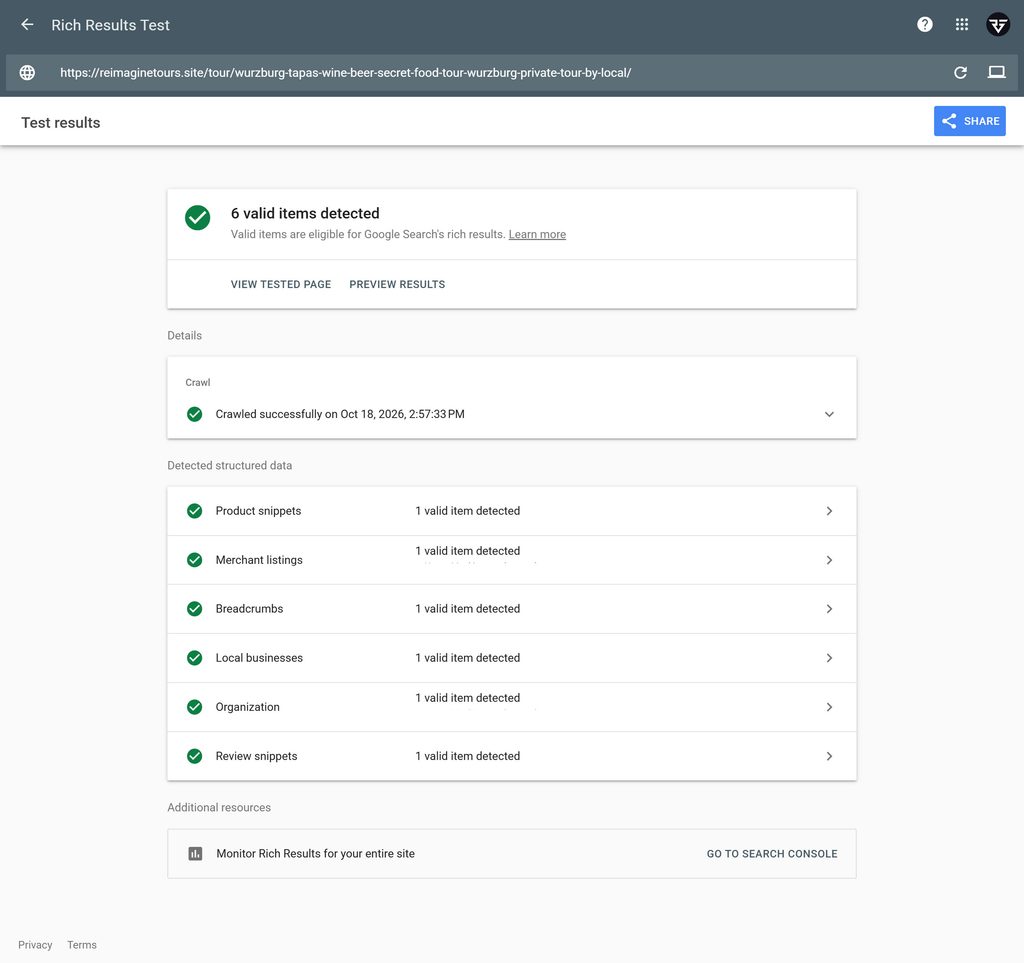
Structured data is generated automatically across supported content types, helping search engines and AI systems understand your business, products, services, people, providers, and destinations. Everything is built from your content and the Company Info you enter, and it works with any public post type you enable. Supported schema types include:
- TouristTrip, Organization, Person, FAQPage, Event, Product, and AggregateRating.
- TravelAgency, BreadcrumbList, WebPage, and WebSite.
- LocalBusiness, Article, TouristAttraction, Place, Service, and Offer, including pricing, availability, and price specifications.
- Tours as TouristTrip, activities and tickets as Event, rentals as Accommodation, extras as Service, and blog posts as Article, with Brand, PostalAddress, ContactPoint, and touristType.
- CollectionPage and ItemList for destination, category, and directory pages.
- Conditional Winery schema when the category, tags, or metadata identify winery-related experiences.
- Works on all post types (including post types rank math does not find)
Related entities are connected with stable JSON-LD identifiers and relationships linking organizations, people, tours, products, locations, and providers, with sameAs references to Wikipedia, Wikidata, and official tourism websites. A centralized schema system keeps markup consistent across pages and matched to the content actually displayed.
A “Unique value proposition” box on the post editor lets you describe what makes each tour, activity, or product special, such as a signature feature, a named experience, or facts only you offer. It helps search engines and AI assistants tell your offering apart from generic descriptions.
AI Crawler Access and LLM Content Discovery
- Dynamically generated robots.txt with configurable AI crawler access. More than 30 AI and search bots are allowed, including Googlebot, Bingbot, GPTBot, ClaudeBot, and PerplexityBot. Bytespider, SemrushBot, AhrefsBot, MJ12bot, and DotBot are blocked because they can generate intensive crawling that consumes server resources, bandwidth, and CPU. The sitemap URL is auto-detected and an X-Robots-Tag: all header is sent.
- Comprehensive XML sitemaps covering supported content types. Optional sitemap generation includes an index, per-post-type and taxonomy sitemaps, an XSL stylesheet, and cache flush on save. By default the plugin leaves your existing sitemaps alone.
- Server-rendered HTML with product information, prices, availability, and policies, no JavaScript required.
- Clean URL structures, with restrictive snippet directives and unintended crawler-blocking rules avoided.
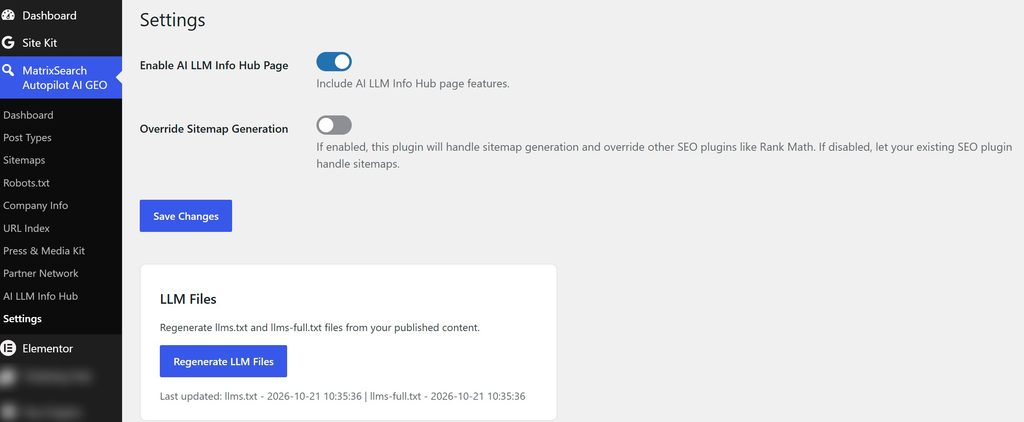
- Enhanced llms.txt and llms-full.txt with full descriptions, titles, URLs, and categorized content listings. Both files are served at your site root, generated from your published content, regenerated when older than 24 hours or on save, and can be regenerated manually. They include a Providers section, and llms-full.txt adds dates and custom meta fields.
- AI crawler visit log showing when GPTBot, ClaudeBot, PerplexityBot, and other AI bots fetch your pages.
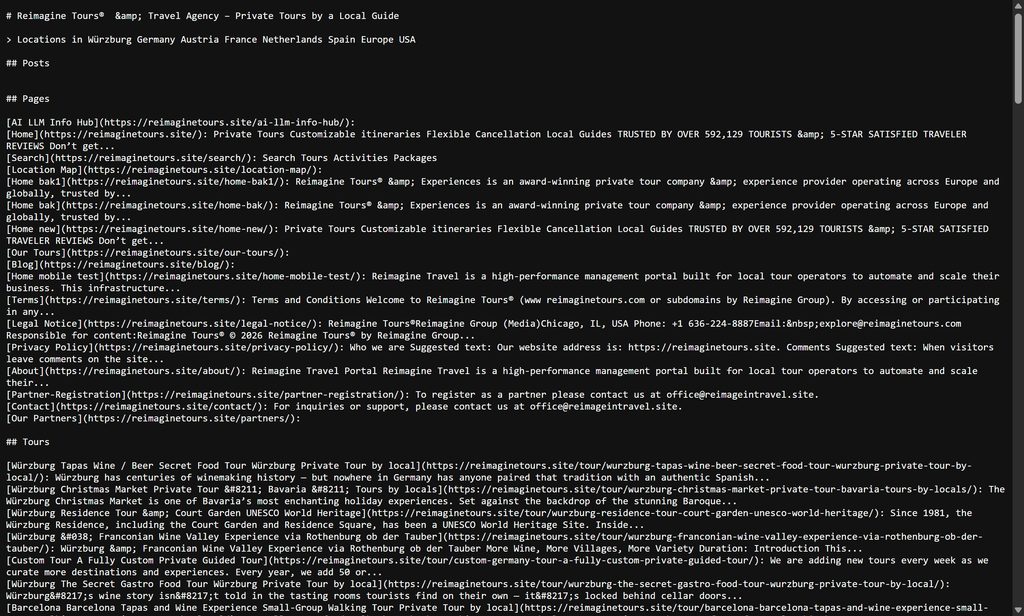
AI LLM Information Hub
A dedicated HTML knowledge hub is generated at /ai-llm-info-hub/, consolidating essential business information for AI systems, search engines, journalists, and visitors. The page is created automatically when you turn it on in Settings, and you choose what it shows. The hub can include:
- Business overview, founders, ownership, and parent-company information.
- An index of important website URLs with detailed page descriptions.
- Service categories, products, geographic coverage, and destinations.
- Partner businesses and their roles, contact information, social profiles, and booking platform connections.
- A press and fact-sheet section with business facts, founder biographies, named experiences, partners, and regions served.
- Selected customer reviews with source, author, date, and rating, up to 20 at a time with duplicates removed.
- Brand fields: slogan, who we are, what we do, why choose us, trusted by, and as seen in.
- Your blog, terms of service, privacy policy, custom links, and social profiles.
- Automatically generated questions and answers based on product fields, review patterns, and destination information, including the FAQs from your first four selected post types.
- Your choice of post types, locations, and number of featured items.
The hub regenerates whenever relevant products, pages, or reviews change. Click here to see a live example.
Automatic Destination Landing Pages
Destination pages are created automatically from your location taxonomy and associated products, with no manual page building. Generated pages can include:
- Location-specific titles, H1 headings, and URLs, built around the exact searches travelers make.
- A concise introductory answer in the first 100 words summarizing offerings, experiences, starting prices, and product counts.
- Q&A sections covering inclusions, meeting points, prices, private versus group options, duration, seasonality, accessibility, group sizes, and languages, straight from your tour fields with no manual writing.
- Content that updates when products are added or changed, plus hierarchical sub-area pages for regions, routes, and destination groupings.
- Dedicated pages for named attractions, wineries, and partner locations, with CollectionPage schema.
- Service combination pages for specific searches such as “private tours in Munich” or “guided tours in Vienna”.
A dedicated differentiator field captures signature experiences, named routes, and distinctive product facts so generated content reflects what makes your offering different.
Service, Category, and Location Directories
Structured directory pages organize products by category, destination, and location, including food tours, castle tours, city tours, activities, events, packages, rentals, tickets, listings, and other configured offerings. Each directory includes a geographic introduction, a complete product list with price, duration, and highlights, internal links between products, destinations, categories, and providers, CollectionPage or ItemList schema, and search-oriented titles and H1 headings based on the actual category and location.
Structured Q&A and Direct Answers
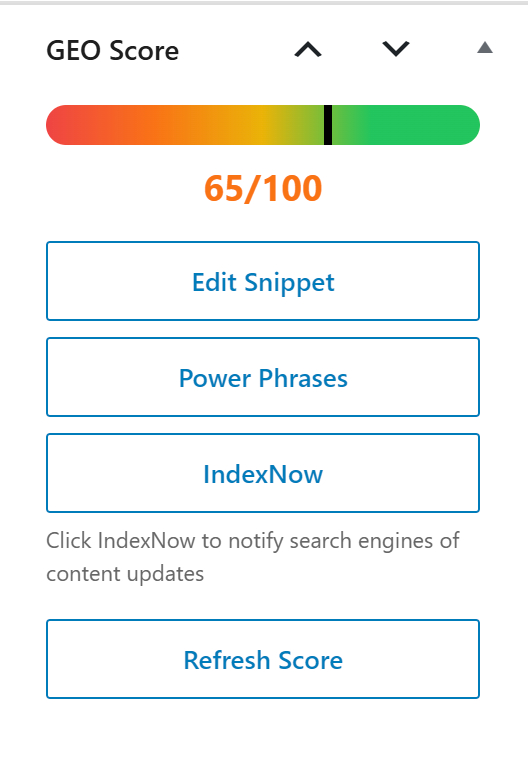
The geo_direct_answer field supports ten content types: tours, extras, activities, packages, rentals, posts, pages, tickets, listings, and events. Answers can be generated from existing content and displayed in consistent sections such as About This Tour, About This Package, or About This Rental.
A dedicated FAQ field (_faqs) supports author-written questions and answers with automatic presentation and FAQPage schema. FAQPage schema is also built automatically from your post content: headings followed by paragraphs, FAQ-titled headings, and question sentences followed by an answer. The hub reads any post meta key containing “faq”, as question/answer arrays or as Q:/A: text.
Administrative guidance and Power Phrases templates (15 phrases plus ready-made Q&A templates) help authors write direct, factual answers on pricing, duration, meeting points, inclusions, seasonality, accessibility, group size, languages, and other product details. Question-style headings with clear, self-contained answers give AI platforms such as ChatGPT and Perplexity something they can quote, and the content covers every query intent: educational, comparison, and occasion-based searches.
Complete Product and Service Information
Detailed product fields let customers, search engines, and AI systems distinguish between similar offerings and answer follow-up questions. Supported fields include:
- Target audiences and occasions such as birthdays, anniversaries, romantic outings, families, and corporate groups.
- Age restrictions and suitability for children.
- Private versus group experiences, and minimum and maximum group sizes.
- Weather policies, contingency arrangements, and availability by day and time.
- Differences between similar products, plus prices, duration, languages, meeting points with map links, accessibility, cancellation conditions, refund percentages, inclusions, exclusions, and practical requirements.
This information displays consistently on product pages and feeds into TouristTrip, Product, and Offer schema, including a per-group price specification. Hub cards and llms-full.txt carry these facts as well. With the Tour Engine theme, the hub is auto-detected and adds an “Additional Information” block matching the tour detail page.
Structured Product Page Components
Consistent product-page sections are generated from existing metadata and reusable fields, including timestamped itineraries built from reusable itinerary items, Things to Know, Why Book With Us, What to Bring, separate included and excluded lists, and practical details covering meeting points, languages, duration, group limits, accessibility, cancellation, and refund terms. Components draw from existing fields wherever possible, reducing duplicate data entry.
Geographic Entity and Local Relevance
Products and businesses are tied to their real geographic context through dedicated fields, descriptive content, and structured data: regions and surrounding cities, landmarks and named attractions, wineries and appellations of origin (AVA), local tourism areas, and geographic coordinates. Your location taxonomy, on any theme, becomes a Place in schema with a parsed PostalAddress and ISO country codes, and location taxonomies get their own sitemap. Place and LocalBusiness entities are connected, and TouristTrip products are associated with the places they visit. The hub lists the geographic regions you serve, with country, city, and a Google Maps link.
Rich Text
Hub descriptions keep the most important opening lines of your full post content with formatting preserved: bold, italic, underline, links, headings, and bulleted lists.
Business Identity, People, and Partner Entities
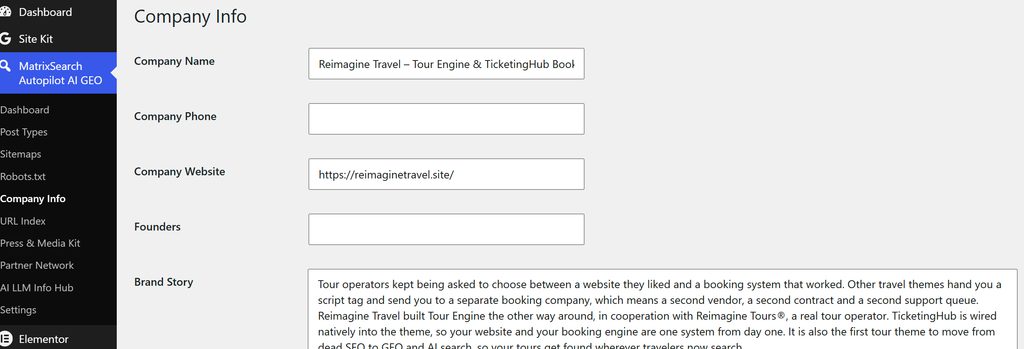
Maintain consistent business identity throughout website content, knowledge resources, and structured data: founder, ownership, and parent-company information, Author schema, guide profiles displaying credentials, provider records for partner businesses with descriptions of their roles, and structured relationships between the business, guides, partners, destinations, and products. Brand and product names stay consistent across pages, schema, the AI LLM Information Hub, and provider records, and identity information can be sourced from site-owner settings and Provider data. Your press fact sheet and competitive positioning (why choose us) live in one central place, ready to be used across your site.
Authoritative External References
Learn More and Official Resources sections on product pages connect visitors and AI systems to official tourism boards and visitor bureaus, attraction and landmark websites, UNESCO World Heritage resources, government tourism sites, reputable travel publications, and Wikipedia and Wikidata, linked through schema sameAs properties and related entity links.
Google Product Feed Generation
Google product feeds are generated from existing product data, including titles, descriptions, prices, images, and URLs, with no separate feed to maintain. Feed access is configured through the site’s settings and connected to the relevant Google product services. Feed eligibility and display depend on Google’s requirements.
Google Business Profile and AI Visibility Monitoring
A Google Business Profile optimization guide and admin status check help you keep your profile complete, since Google AI often draws on it. AI visibility monitoring tracks how often you appear in ChatGPT, Gemini, Google AI, and Perplexity answers using a fixed set of questions, so you can measure real improvement.
Social Media and Booking Platform Connections
Official business profiles and booking platforms are connected for consistent references across the website and the AI LLM Information Hub: Instagram, Facebook, LinkedIn, TikTok, YouTube, and Twitter/X, plus TripAdvisor, Viator, GetYourGuide, Expedia, and Booking.com. Official links are displayed prominently.
Works With Your SEO Plugin
If Rank Math is active, the plugin adjusts the Info Hub page title, description, and entity data, fixes Organization nodes (name, sameAs, address, telephone), corrects the author type, removes noindex on the hub, and keeps the hub in the sitemap, including for Yoast.
Administrative GEO Content Management
Dedicated admin fields and helpers let site owners manage AI-search information without editing schema code: direct-answer fields and display settings, Power Phrases helpers and Q&A templates, FAQ authoring fields, product differentiators, Things to Know and Why Book With Us fields, press and fact-sheet information, competitive positioning, inclusion and exclusion fields, and provider and site-owner business information. Settings pages cover Post Types, Sitemaps, Robots.txt, Company Info, URL Index, Press and Media Kit, Partner Network, AI LLM Info Hub, and LLMs Txt. Recommended FAQs for each post type and terms guidance for weather policies and contingencies help every site get filled in the same, complete way.
The system automates content structure, page templates, data relationships, and schema generation, while you supply the business-specific facts, expertise, positioning, and original descriptions that make the content distinctive.
*For ticketinghub the plugin / code will get the data from your booking widget, and the product detail page only, unless you are running your website on WordPress. For websites not running on WordPress – we will help you integrate our code (html sites etc).