Munichɐ] ) is the capital and most populous city of the German state of Bavaria. As of 31 December 2025, Munich had a population of 1,505,036 according to the Bavarian State Office for Statistics, making it the third most-populous city in Germany after Berlin and Hamburg. Munich is the largest city in Germany that is not a state of its own, and it ranks as the 11th-largest city in the European Union (EU). The metropolitan area has around 3 million inhabitants, and the broader Munich Metropolitan Region is home to about 6.2 million people. It is the third largest metropolitan region by GDP in the EU. Located on the Isar River near the Alps, it is the seat of the Upper Bavarian administrative region. With 4,800 people per km2, Munich is Germany's most densely populated municipality and the second-largest city in the Bavarian dialect area after Vienna.
The first record of Munich dates to 1158. The city has played an important role in Bavarian and German history. During the Reformation, it remained Catholic. Munich became the capital of the Kingdom of Bavaria in 1806 and developed as an artistic and technological hub. The House of Wittelsbach ruled until 1918, when the German revolution of 1918–1919 ended their reign and saw the short-lived Bavarian Soviet Republic. In the 1920s, Munich became a centre of political movements, including the rise of the Nazi Party. The city was known as the "Capital of the Movement". During World War II, Munich was heavily bombed, but much of its historic architecture has since been restored. After the war, the city's population and economy grew rapidly. Munich hosted the 1972 Summer Olympics and the 1974 FIFA World Cup final.
Munich's economy is based on high tech, automobiles, the service sector, information technology, biotechnology, engineering, and electronics. Multinational companies such as BMW, Siemens, Allianz SE, and Munich Re are headquartered there. The city has two research universities and many scientific institutions. Munich is the wealthiest city in the EU by GDP per capita among cities with over one million inhabitants and is among the most expensive German cities for real estate and rents. The city is a major transport hub, with an extensive public transport network, long-distance railway connections, and Munich Airport, Germany's second-busiest airport.
Munich has a high standard of living, ranking first in Germany and third worldwide in the 2018 Mercer survey. It was named the world's most liveable city by Monocle's Quality of Life Survey 2018. In 2023, 30.1% of residents were foreigners, and 19.4% were German citizens with a migration background. Munich is known for its architecture, cultural venues, sports events, exhibitions, and the annual Oktoberfest, the world's largest Volksfest.
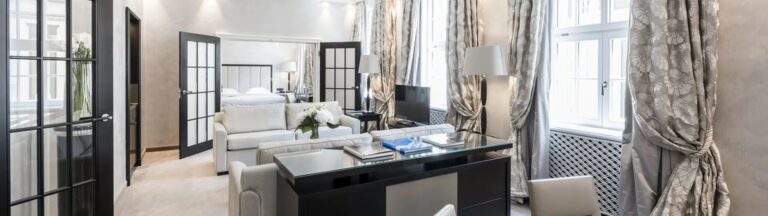
Der Bayerische Hof München verbindet Luxus, Kulinarik, Wellness und Entertainment im Herzen der Stadt. Jetzt Zimmer entdecken und direkt buchen. Our hotel is as diverse as the guests who stay here. Here, you can get to know the place by taking a virtual tour.
Thank you for your inquiry. We will get back to you within 24 hours.
Thank you for your inquiry. We will get back to you within 24 hours.
Thank you for your inquiry. We will get back to you within 24 hours.